Coconut Milk, Coconut Water and More
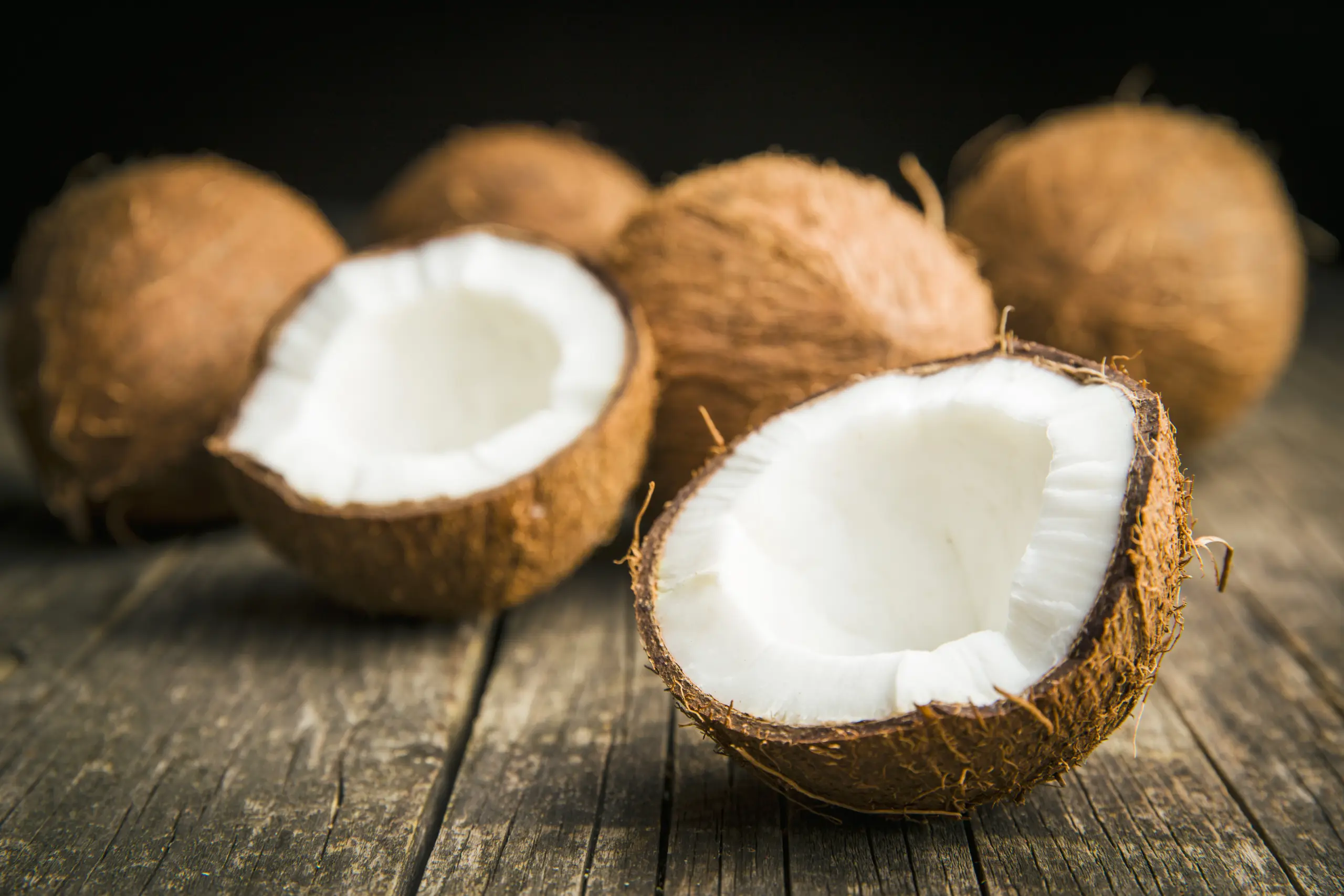
Our customers use coconut because of its versatility, functional properties, and strong appeal in both health-focused and global cuisine products. Coconut is used in many forms, including coconut milk, coconut cream, oil, water, flour, and shredded flesh, allowing it to fit into a wide range of applications such as beverages, desserts, snacks, and dairy alternatives.
Its naturally rich, creamy texture makes it an effective substitute for dairy, especially in plant-based products, while coconut oil provides a stable fat source for cooking and processed foods. Coconut also contains beneficial fats and electrolytes, supporting health and wellness marketing claims. Additionally, its distinctive flavor and association with tropical ingredients enhance product appeal, and its availability in shelf-stable processed forms makes it practical for large-scale manufacturing.
Coconut Formats and Varieties
Tall, Dwarf and More
We source high-quality Tall (Typica) and Dwarf (Nana) coconut varieties, selections celebrated for their distinct functional outputs and crop yields. The Tall variety, globally revered as the industrial standard for meat-based ingredients, provides a thick, dense endosperm (white meat) packed with high-grade natural fats and lauric acid. This makes it the ultra-premium selection for manufacturing high-yield Coconut Cream, Coconut Milk, and Desiccated shreds.
For formulations requiring a clean, sweet liquid matrix with low acidity and a high concentration of natural electrolytes, we utilize the Dwarf coconut variety. Famed for its high volume of pure, clear internal water when harvested young, it serves as the ideal global base for premium Coconut Water processing.
By sourcing these universally recognized varieties directly from their optimal global growing regions (including Southeast Asia, the Philippines, and Indonesia), we guarantee consistent fat-to-moisture ratios, strict microbiological compliance, and traceable origin for your industrial supply chain.
Our Coconut Ingredients
For Food and Beverages
Tapped directly from the interior cavity of young, green coconuts and gently pasteurized, Coconut Water is a clear, free-flowing liquid. It functions as an ultra-premium, naturally low-calorie fluid base packed with native electrolytes, particularly potassium and magnesium. Because it is highly sensitive to thermal abuse—which can cause its natural sugars and amino acids to turn an unappealing pink or brown—processing lines utilize flash pasteurization or micro-filtration to protect its delicate, crisp flavor profile and clean visual appearance.
-
Premium Hydration & Wellness Pipelines: Isotonic sports beverages, functional wellness waters, and premium juice blends looking to lower caloric density while maintaining a “100% fruit juice” label claim.
-
Craft Beverages & RTDs: Natural mixers for tropical mocktails, coconut-infused cold brew coffees, and RTD teas requiring a subtle, clean tropical top-note without adding fat or turbidity.
Produced by mechanically pressing the grated, white meat of mature coconuts with or without added water, these lipid-rich formats are the plant-based powerhouses of the dairy-alternative sector. They are standardized strictly by fat content. Coconut Milk is general around 10% fat, while Coconut Cream is generally closer to 20%. Because they are natural oil-in-water emulsions, they are highly prone to “creaming” (phase separation) under thermal stress or long-term storage. Sourcing teams can specify formats with or without natural stabilizers (like guar gum) depending on whether the automated production line utilizes high-pressure homogenization.
-
Dairy-Free & Plant-Based Pipelines: Base matrices for spoonable vegan yogurts, plant-based ice creams, non-dairy creamers, and ready-to-drink milk alternatives requiring a rich, luxurious mouthfeel.
-
Prepared Foods & Culinary Sauces: Commercial curry bases, tropical soups, shelf-stable pourable sauces, and bakery glazes requiring excellent thermal stability and lipid-driven flavor carrying capacity.
Produced by shredding and drying the defatted, washed white meat of mature coconuts, Desiccated Coconut is a low-moisture, free-flowing solid format. It is graded by cut size (Extra Fine, Fine, Medium, Flake, or Shred) and moisture content. It provides a long ambient shelf life, high dietary fiber, and a distinct chewable texture.
-
Commercial Baking & Confectionery: Texturizing inclusions for chocolate bars, programmatic enrobing for baked goods, crunch elements for granola and protein bars, and decorative toppings for donuts and pastries.
-
Industrial Cereal & Snack Blends: Ready-to-eat breakfast cereals, trail mixes, and extruded grain snacks looking for a stable, low-water-activity fruit component.
When the tender flesh of the coconut is processed to maintain its exact geometric structure rather than crushed or dried, preservation relies on advanced Individually Quick Frozen technology. Fresh, white coconut meat is diced or sliced into uniform cubes or strips and passed through a blast-freezing tunnel to yield Coconut IQF. Free of structural collapse, clumping, or moisture migration, these units are highly stable and engineered to restore a premium, “freshly cracked” visual appeal and firm, snappy bite directly to the final application.
-
Frozen Food & Meal Kit Inclusions: Frozen acai bowl kits, stir-fry meal prep kits, par-baked grain bowls, and commercial tropical dessert kits where intact fruit geometry and controlled moisture release during thawing are critical.
-
Industrial Bakery & Frozen Dairy Mixing: Dosed directly into automated bulk production lines for premium ice cream inclusions, gelato ribbons, or quick-service restaurant (QSR) smoothie bowl bases to instantly elevate the product’s premium visual tier.
Coconut Milk, Coconut Cream, Coconut Water
More About Coconut Formats

The Brothers International
Quality Promise
Brothers International and its 4 divisions, Brothers Ingredients, Dennick FruitSource, Hosh International and Food Partners, are trusted global importers of premium ingredients to major food and beverage manufacturers in North America. We deliver consistent quality and supply across every format the industry demands. Our coconuts are sourced from the earth’s prime growing regions where farming expertise, climate and soil composition come together to produce coconuts of exceptional caliber. All of our suppliers undergo a rigorous vetting process to ensure we work with only the highest-quality processors and can fully guarantee traceability, sustainability, and compliance with all international regulations.
Each of our divisions has a specialized operations team to manage shipments and coordinate with customers and suppliers. They work closely with our in-house customs team to ensure efficient clearance, and collaborate with the USDA and FDA to maintain full regulatory compliance. This ensures your ingredients move seamlessly through every stage of import, arriving on time and ready for production with complete confidence. With decades of sourcing expertise and a strong commitment to customer success, you can count on Brothers International to deliver the premium ingredients your products require.


Industry Glossery
A Reference Guide for Fruit Ingredient Terminology
Check out our glossary for a consolidated reference of commonly used terminology across the global fruit ingredient industry. It provides straightforward definitions and context for the language and concepts referenced throughout the industry.